Mary's Role as a Model of Faith for All Believers
Updated at: 2023-08-05 13:20:18 (2 years ago by Melkisedeck Leon Shine)
๐นMary's Role as a Model of Faith for All Believers๐น
As a devout Christian, there is no doubt that the Virgin Mary holds a special place in my heart. She is not only the Mother of God, but also a shining example of faith for all believers. Throughout the Bible, we see countless instances where Mary's unwavering trust in God serves as a model for us to follow. Let's explore some of these points and dive deeper into the incredible role Mary plays in our spiritual lives.
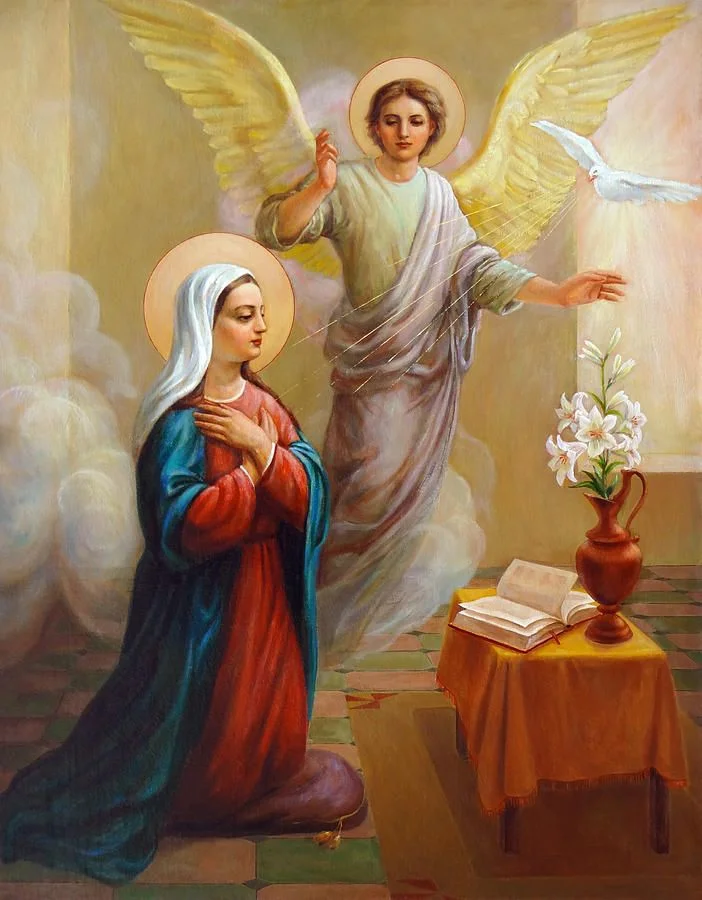
1๏ธโฃ The Annunciation: One of the most iconic events in Mary's life is when the angel Gabriel appeared to her and announced that she would conceive a child by the Holy Spirit. Despite the confusion and uncertainty that must have overwhelmed her, Mary responded with complete surrender, saying, "Behold, I am the handmaid of the Lord; let it be to me according to your word" (Luke 1:38). Her resolute faith in God's plan is truly inspiring.
2๏ธโฃ The Magnificat: In the Gospel of Luke, we find Mary's beautiful hymn of praise known as the Magnificat. This eloquent expression of gratitude and humility demonstrates Mary's deep spiritual understanding and trust in God's providence. Through her words, we are reminded of the importance of surrendering to God's will and magnifying His greatness in our lives.
3๏ธโฃ The Wedding at Cana: At the wedding feast in Cana, Mary's role as intercessor shines brightly. When the wine ran out, she turned to Jesus and said, "They have no wine." Even though Jesus initially replied, "Woman, what does this have to do with me?" (John 2:4), Mary trusted in His power and told the servants, "Do whatever he tells you" (John 2:5). As a result, Jesus performed His first miracle, turning water into wine. Mary's unwavering faith in her Son's ability to provide is a powerful reminder for us to turn to Jesus in all our needs.
4๏ธโฃ The Crucifixion: Mary's faith was tested like no other when she witnessed the crucifixion of her Son, Jesus. Despite the immense pain and sorrow she must have felt, Mary remained steadfast in her trust in God's plan. Standing at the foot of the cross, she became not only the Mother of God but also the Mother of all believers, as Jesus entrusted her to John and, by extension, to each of us (John 19:26-27). In her sorrow, Mary teaches us to find comfort and strength in the midst of our own sufferings.
5๏ธโฃ The Assumption: The Assumption of Mary, dogmatically defined by the Catholic Church, affirms that at the end of her earthly life, Mary was taken body and soul into heavenly glory. This great privilege bestowed upon her by God further emphasizes her unique role as a model of faith. Just as Mary was assumed into heaven, we too aspire to follow her example and strive for eternal life with God.
The Catechism of the Catholic Church beautifully summarizes Mary's role, stating, "By her complete adherence to the Father's will, to his Son's redemptive work, and to every prompting of the Holy Spirit, the Virgin Mary is the Church's model of faith and charity" (CCC 967). Through her obedience, trust, and love for God, Mary exemplifies what it means to live a life centered on faith.
It is worth mentioning that the Catholic Church honors Mary as the Immaculate Conception, a belief that she was preserved from the stain of original sin from the moment of her conception. This unique privilege further underscores her role as a model of faith and purity.
When we reflect on Mary's life, we cannot help but be filled with admiration and gratitude for her unwavering faith. She teaches us to trust in God's plan, to surrender our lives to His will, and to intercede for others with love and compassion. Mary's example is a guiding light for all believers, reminding us of the power of faith in our spiritual journey.
So, dear friend, what are your thoughts on Mary's role as a model of faith? How has her example influenced your own spiritual life? Let us continue to seek her intercession and strive to imitate her unwavering trust in God. ๐๐น
Updated at: 2025-06-05 13:15:28 (9 months ago by Melkisedeck Leon Shine)
Introduction: Defining Key Concepts
This discourse examines the pivotal role of Mary, Mother of God, within the Catholic Church, focusing on her contribution to ecclesial unity. We will explore this through the lens of Marian theology, analyzing scriptural references, papal pronouncements, and the established doctrines of the Catholic faith. Key concepts include ecclesial unity, referring to the bond of communion among members of the Church; Marian theology, the theological reflection on the person and role of Mary; and intercession, the act of praying on behalf of others. Understanding these concepts is crucial for comprehending Mary's significance within the Catholic tradition.
Mary's Theological Role and Scriptural Basis
Catholic doctrine posits Mary's unique role in salvation history, beginning with her divine election as the Theotokos (God-bearer). The Annunciation (Luke 1:26-38), where the Archangel Gabriel announces her divinely ordained maternity, forms the foundational narrative. The Magnificat (Luke 1:46-55), Mary's hymn of praise, exemplifies her profound faith and acceptance of God's will, highlighting her complete surrender to the divine plan. These scriptural passages establish Mary not merely as a historical figure but as a pivotal participant in the redemptive act of God.
Mary as "Mother of the Church": A Doctrinal Foundation
The declaration of Mary as "Mother of the Church" by Pope Paul VI in 1964 formalizes a long-held belief within the Catholic tradition. This title transcends a symbolic role, emphasizing her maternal care for the entire Church. It draws upon the concept of spiritual motherhood, mirroring her role in caring for Jesus and extending this maternal solicitude to all believers. This theological perspective resonates with the concept of the Church as the Mystical Body of Christ, with Mary playing the maternal role in nurturing and guiding its members.
Mary as a Catalyst for Ecclesial Unity
Mary's role fosters unity within the Catholic Church by serving as a unifying figure for diverse communities. Her example of faith, obedience, and unwavering love for God provides a powerful model for believers. Her intercession, a central element of Catholic piety, provides comfort and strengthens the bond between individuals and God, fostering a shared experience of faith. This communal experience, based on shared devotion and belief in Mary's intercessory power, promotes unity across geographical, cultural, and socio-economic boundaries.
Marian Devotion and its Impact on Spiritual Growth
Marian devotion, encompassing practices such as praying the Rosary, the Hail Mary, and observing Marian feasts, deepens the spiritual lives of believers. This devotion is not simply a sentimental practice but a theological engagement with Mary as a model of faith and a participant in salvation history. The act of prayer itself reinforces community, as believers collectively turn to Mary, strengthening their bonds of faith. This can be analyzed through the lens of social identity theory, where shared practices reinforce group identity and unity.
Mary as a Model of Holiness and Obedience
Mary's response to the Annunciation, expressed in her "Fiat" ("Let it be"), exemplifies complete obedience and trust in God's will. This act of absolute surrender serves as a profound model for Christian discipleship, emphasizing the importance of faith and submission to God's plan. This resonates with the theological concept of kenosis, the self-emptying of Christ, reflecting Maryโs self-giving act in becoming the Mother of God. Her life serves as a pathway towards spiritual maturity and holiness.
Mary's Role in the Eucharist: A Central Sacrament
Maryโs profound connection to the Eucharist, the central sacrament of the Catholic faith, stems from her role in the Incarnation. The Eucharist, the Body and Blood of Christ, is considered the ultimate expression of God's love and sacrifice. Mary's presence at the foot of the cross and her unwavering faith emphasizes the importance of the Eucharist within the life of the Church, reinforcing the bond between Christ and his followers.
Marian Apparitions and their Ongoing Relevance
Reported Marian apparitions, such as those at Lourdes and Fatima, are seen as manifestations of Mary's continued presence in the world and her ongoing concern for humanity. These events have significantly impacted Catholic communities, inspiring faith, encouraging conversion, and promoting a heightened devotion to Mary. These apparitions can be viewed through the lens of social psychology, examining their impact on community cohesion and collective belief.
Conclusion and Recommendations
Mary, Mother of the Church, plays a crucial role in fostering unity within the Catholic faith. Her life, teachings, and intercessory power serve as a cornerstone of Catholic spirituality. Further research could explore the cross-cultural expressions of Marian devotion, analyzing their impact on both individual spirituality and community cohesion. Understanding the psychological and sociological dimensions of Marian devotion is also critical for gaining a comprehensive understanding of her impact. The findings of such research could inform pastoral practices, promoting stronger ecclesial unity and fostering a more profound appreciation of Maryโs place in the Catholic tradition.
Reader Pool:
Considering the multifaceted nature of Marian theology and its impact on ecclesial unity, how can the Church effectively communicate Maryโs significance to contemporary audiences in a way that resonates with diverse perspectives and promotes meaningful engagement with faith?
Updated at: 2025-06-21 00:09:32 (9 months ago by Melkisedeck Leon Shine)
This article provides a comprehensive analysis of reported miracles associated with Marian shrines, integrating theological and sociological perspectives to understand their enduring significance. We will define key concepts to establish a robust analytical framework. A miracle, in this context, is defined as an extraordinary event attributed to divine intervention, defying known natural laws. A Marian shrine is a sacred site associated with apparitions or significant events relating to the Virgin Mary, serving as a focal point for pilgrimage and devotion. Intercession refers to Mary's role, as understood within Catholic theology, in mediating between humanity and God. The analysis will draw upon relevant sociological theories, psychological principles, and theological interpretations to illuminate the multifaceted nature of these phenomena.
Marian shrines function as powerful centers of Catholic faith, attracting millions of pilgrims annually. This enduring appeal can be analyzed through the lens of Durkheim's theory of collective effervescence, which posits that shared religious experiences generate heightened emotional and social energy. The collective belief in Mary's intercession and the potential for miraculous events fosters a strong sense of community and shared purpose among pilgrims. This collective effervescence strengthens individual faith, creating a powerful emotional context conducive to reported miraculous healings and spiritual transformations. Furthermore, the placebo effect, a well-documented psychological phenomenon, significantly influences perceived healing; strong faith and expectation of healing can activate the body's inherent restorative mechanisms. The numerous testimonials of healing and spiritual renewal at these shrines support this interplay between sociological and psychological factors.
Catholic doctrine provides a framework for understanding Marian apparitions and their significance. These apparitions, often interpreted as divine communications, reinforce the belief in Mary's intercession and her ongoing role in the spiritual lives of believers. The theological interpretations surrounding these events shape the devotional practices and expectations of pilgrims. The acceptance and interpretation of apparitions vary within Catholic theology, highlighting the complex interplay between faith, doctrine, and individual experience. The analysis of specific doctrinal pronouncements related to apparitions provides further insights into the theological underpinnings of beliefs associated with Marian shrines.
Several prominent Marian shrines illustrate these dynamics. Our Lady of Guadalupe in Mexico City, with its iconic image, represents a powerful symbol of faith and national identity, attracting immense pilgrimage. The reported miraculous healing waters of Lourdes, France, highlight the intertwining of faith, expectation, and potential psychosomatic effects. The apparition at Fatima, Portugal, and its associated "Miracle of the Sun," exemplify mass-witnessed events that profoundly influence belief systems. Similar collective experiences are reported in Medjugorje, Bosnia and Herzegovina, with its ongoing apparitions, and Knock, Ireland, demonstrating the geographical and cultural diversity of these phenomena. Analyzing these case studies allows for a comparative understanding of the varied manifestations of faith and the role of cultural contexts in shaping beliefs and experiences.
The recitation of the rosary, a central devotional practice at many Marian shrines, fosters a meditative state conducive to spiritual experiences and feelings of peace and comfort. The repetitive nature of the prayer, combined with its focus on Mary's life and role, may facilitate a sense of connection and solace. This practice, combined with other devotional acts such as prayer and acts of piety, strengthens the sense of community and shared faith amongst pilgrims. The intensity of devotional practices at these sites are often cited as factors contributing to reported miraculous healing and conversions.
The act of pilgrimage itself constitutes a significant spiritual and psychological undertaking. The journey to a Marian shrine provides a time for introspection, prayer, and detachment from the stresses of daily life. This period of focused devotion facilitates profound spiritual growth, deepening one's relationship with God, and strengthening faith. Social interaction among fellow pilgrims further enhances the transformative impact, fostering a sense of belonging and shared experience. Applying pilgrimage theories helps illustrate how this journey can serve as a Rite of Passage, marking significant personal or spiritual transformations.
The reported miracles associated with Marian shrines are the result of a complex interplay of faith, collective belief, psychological factors, and theological interpretations. While scientific methods can explore potential physical explanations for some reported healings, the enduring power of these sites resides in their capacity to foster strong community, shared experiences, and profound spiritual transformations. Future research should employ mixed-methods approaches, integrating quantitative analyses of reported healings with qualitative studies exploring the subjective experiences of pilgrims. This multi-faceted approach will provide a deeper understanding of the diverse factors shaping these phenomena. Further research should explore the cultural and socio-economic factors influencing the popularity and perceived efficacy of Marian shrines across varied geographical and socio-cultural contexts.
This analysis suggests that the significance of Marian shrines extends beyond literal interpretations of miracles. The spiritual and social benefits, including strengthened faith, community bonding, and emotional healing, highlight their substantial role in religious practice. These findings underscore the need for continued interdisciplinary research, integrating theological reflection on Mary's role within the Church with psychological and sociological explorations of faith-based healing and community formation. A deeper understanding of these factors will enhance our capacity to appreciate the complexities of religious belief and practice.
Reader Pool: Considering the complex interplay of faith, psychology, and sociology in shaping experiences at Marian shrines, what innovative research methodologies could most effectively illuminate the nuanced relationship between these factors and reported miracles?
Updated at: 2023-08-05 13:19:39 (2 years ago by Melkisedeck Leon Shine)
Understanding Mary's Role in the Economy of Salvation ๐น
The Virgin Mary plays a pivotal role in the economy of salvation. As the Mother of God, she was chosen by God to bring forth his only begotten Son, Jesus Christ, into the world. ๐
Mary's unique role as the Mother of God is emphasized in the Bible. In Luke 1:43, Elizabeth, filled with the Holy Spirit, exclaims, "And why is this granted me, that the mother of my Lord should come to me?" This verse clearly shows Mary's divine motherhood and her importance in salvation history. ๐
It is crucial to recognize that Mary remained a perpetual virgin, even after giving birth to Jesus. This is supported by various biblical passages, such as Matthew 1:25, which states, "But he knew her not until she had borne a son," indicating that Joseph did not have marital relations with Mary until after the birth of Jesus. This reaffirms the sacredness of Mary's role as the Mother of God. ๐
Mary's role in salvation extends beyond her physical motherhood. She is the perfect model of faith and obedience, as demonstrated in the Annunciation when she humbly accepted God's plan for her life. In Luke 1:38, Mary says, "Behold, I am the handmaid of the Lord; let it be to me according to your word." Her willingness to submit to God's will serves as an inspiration for all Christians. ๐
The Catechism of the Catholic Church teaches that Mary's obedience to God's plan of salvation "gave free consent to the divine plan of salvation" (CCC 494). Her "fiat" (Latin for "let it be done") paved the way for the redemption of mankind through the birth of Jesus. ๐
Mary's role as the Mother of God allows her to intercede for us before God. Just as Jesus performed his first miracle at the Wedding at Cana at Mary's request (John 2:1-11), she continues to intercede for us and presents our prayers to her Son, Jesus. This is beautifully expressed in the traditional Catholic prayer, the Hail Mary. ๐
The saints of the Catholic Church have also recognized the importance of Mary's role in salvation. St. Louis de Montfort, a prominent Marian saint, wrote, "Mary is the safest, easiest, shortest, and most perfect way of approaching Jesus" (True Devotion to Mary). Devotion to Mary can deepen our relationship with Christ and lead us closer to salvation. ๐น
Mary's role in salvation is not to be worshipped, but rather revered and honored. The Catholic Church teaches that Mary is venerated as the highest of all creatures, but she is not divine. This distinction is important to maintain, as worship is reserved for God alone. ๐
Mary's role in the economy of salvation is intricately connected to her son, Jesus. Just as Eve played a significant role in the fall of humanity, Mary, as the New Eve, played a crucial role in our redemption. Through her cooperation with God's plan, she became the vessel through which the Savior entered the world. ๐
The Catholic Church teaches that Mary's role as the Mother of God is not limited to her earthly life, but extends to her heavenly role as the Queen of Heaven. In the Book of Revelation, Mary is depicted as the woman clothed with the sun, symbolizing her exalted status and reign alongside her Son in heaven (Revelation 12:1). ๐
Pope Saint John Paul II once said, "Mary is the sure path to our meeting with Christ." By understanding and appreciating Mary's role in the economy of salvation, we can deepen our faith, draw closer to Christ, and ultimately find our salvation through his mercy and grace. ๐
As Catholics, we have a rich tradition of honoring and seeking the intercession of the Blessed Virgin Mary. Through the recitation of the Rosary, the Angelus, and other Marian prayers, we can grow in our love for Mary and develop a deeper understanding of her role in salvation. ๐ฟ
It is important to remember that devotion to Mary does not detract from our relationship with Jesus. On the contrary, it enhances and enriches our understanding of Christ's work of redemption. Just as Mary pointed others to Jesus during his earthly ministry, she continues to lead us closer to her Son today. ๐น
Mary's role in salvation invites us to reflect on our own lives and how we can imitate her virtues of faith, obedience, and humility. Just as she embraced God's plan for her life, we too are called to surrender ourselves to God's will and participate in the economy of salvation. ๐
What are your thoughts on Mary's role in the economy of salvation? How has devotion to Mary impacted your faith journey? Let us continue to explore and deepen our understanding of this beautiful aspect of our Catholic faith. ๐บ
Updated at: 2023-08-05 13:20:15 (2 years ago by Melkisedeck Leon Shine)
Mary, Star of Evangelization: Spreading God's Word โจ๐
Introduction: The role of Mary, the Mother of God, in spreading the Word of God is truly remarkable. ๐ Throughout history, she has been a shining example of faith and obedience, guiding us towards a deeper understanding of our Christian calling. Let us explore how Mary continues to inspire and lead us in our mission of evangelization.
The Annunciation: In the Gospel of Luke, we read about the angel Gabriel appearing to Mary and announcing that she would conceive a child by the power of the Holy Spirit. ๐ This event marks the beginning of Mary's journey as the bearer of God's Word. Through her humble acceptance, she became the vessel through which Jesus, the Savior of the world, entered into our lives.
The Visitation: After learning about her own miraculous conception, Mary wasted no time in bringing the good news to her cousin Elizabeth. ๐ค Their encounter is a beautiful example of how Mary's presence radiated joy and brought blessings to others. As we strive to spread God's Word, let us follow Mary's lead and reach out to those in need of comfort and encouragement.
The Wedding at Cana: When the wine ran out at the wedding feast, Mary turned to her son Jesus and asked for His intervention. ๐ฆ This simple act of faith shows us Mary's role as our intercessor, always bringing our needs before her Son. Just as she interceded for the couple at Cana, Mary intercedes for us today, guiding and strengthening us in our mission of evangelization.
The Crucifixion: As Jesus hung on the cross, Mary stood beside Him, sharing in His suffering and offering her support. ๐ This powerful image illustrates Mary's unwavering faith and commitment to the mission of her Son. In our own efforts to share the Gospel, we can turn to Mary for guidance and strength, knowing that she understands our struggles and will walk with us every step of the way.
The Assumption: At the end of her earthly life, Mary was assumed body and soul into Heaven. ๐ This glorious event confirms her special place in God's plan and her ongoing role as the Star of Evangelization. Just as she was lifted up to be with her Son, Mary continues to lift our hearts and minds towards the love and mercy of God.
The Rosary: The Rosary is a powerful prayer, often associated with Mary and her role in spreading the Word of God. ๐ฟ By meditating on the mysteries of the Rosary, we enter into a deeper understanding of the life of Jesus and His teachings. The Rosary serves as a tool for evangelization, reminding us of Mary's intercession and inspiring us to share the Good News with others.
The Catechism of the Catholic Church: According to the Catechism, Mary's role in the Church is "intrinsic to Christian worship" (CCC 971). Her unique relationship with Jesus and her unwavering faith make her an essential figure in our spiritual journey. As we seek to spread God's Word, let us turn to the teachings of the Church and embrace Mary as our guide and model of evangelization.
Saints' Devotion to Mary: Throughout history, countless saints have held a deep devotion to Mary and her role in spreading the Gospel. St. Maximilian Kolbe, for example, referred to Mary as the "Immaculate Conception" and believed that through her intercession, souls could be saved. Saints such as St. Louis de Montfort and St. Teresa of Calcutta also emphasized the importance of Mary in our spiritual lives. Their examples encourage us to cultivate a strong relationship with Mary and seek her guidance in our evangelization efforts.
The Joyful Mystery of the Rosary: The Joyful Mystery of the Rosary, which includes the Annunciation and the Visitation, invites us to reflect on Mary's active role in proclaiming the Word of God. As we meditate on these mysteries, we are reminded of Mary's openness to God's will and her willingness to fulfill her mission as the Mother of God. Let us seek to imitate Mary's example and bring the joy of the Gospel to all we encounter.
The Magnificat: In the Gospel of Luke, Mary proclaims the Magnificat, a hymn of praise to God for His mighty deeds. ๐ถ This beautiful prayer serves as a reminder of the transformative power of God's Word and the importance of spreading His message of love and salvation. As we strive to evangelize, let us allow the words of Mary's Magnificat to inspire and guide us.
Mary's Perpetual Virginity: According to the Catholic belief, Mary remained a virgin throughout her life, even after giving birth to Jesus. This unique aspect of Mary's life allows us to focus on her special relationship with God and her complete devotion to His will. By embracing Mary's example of purity and commitment, we can more effectively spread the Word of God with sincerity and integrity.
The Rosary & Evangelization: As Pope St. John Paul II said, "The Rosary is my favorite prayer, a marvelous prayer" (Saint John Paul II). This sentiment reflects the deep connection between the Rosary and the mission of evangelization. By praying the Rosary, we open ourselves to the guidance and intercession of Mary, who leads us to a deeper understanding of God's Word and empowers us to share it with others.
Mary, Our Mother: In the Catholic Church, we refer to Mary as our mother, acknowledging her care and guidance in our spiritual lives. Just as a loving mother supports and nurtures her children, Mary encourages us to grow in our faith and share the Gospel with others. By embracing Mary as our mother, we can find strength and inspiration in our mission of evangelization.
Closing: Mary, Star of Evangelization, continues to shine brightly, leading us towards a deeper understanding of God's Word and inspiring us to share it with the world. Through her example, intercession, and unwavering faith, she guides us in our mission of spreading the Good News. Let us embrace Mary as our mother and seek her guidance as we strive to fulfill our call to evangelize. How has Mary impacted your own journey of evangelization? We would love to hear your thoughts and experiences! ๐น๐
Updated at: 2023-08-05 13:19:27 (2 years ago by Melkisedeck Leon Shine)
๐ Mary, Mother of God: A Source of Comfort and Hope ๐
Introduction ๐น In the realm of Christianity, one figure stands out as a beacon of comfort and hope: Mary, the Mother of God. ๐ As a devoted Catholic, I find solace and inspiration in her unwavering love and faith. Let us explore how Mary's presence can bring immense comfort and hope into our lives.
Divine Motherhood ๐ฉโ๐ฆ Mary's unique role as the Mother of God is a source of immense comfort for believers. In Luke 1:31, the angel Gabriel declares to Mary, "Behold, you will conceive in your womb and bear a son, and you shall name him Jesus." This miraculous event marked the beginning of Mary's journey as the chosen vessel to bring forth the Son of God into the world.
Intercessor and Advocate ๐ As the Mother of God, Mary holds a special place in our hearts. In times of difficulty and despair, we can turn to her as a source of hope and comfort. Just as a loving mother cares for her children, Mary intercedes for us before the throne of God. โค๏ธ In John 2:3-5, at the wedding in Cana, Mary's plea to Jesus for help resulted in the miracle of water turning into wine.
Motherly Compassion and Love ๐ Mary's motherly compassion and love extend to all of humanity. She stood at the foot of the cross, witnessing the agony of her son, Jesus, as he sacrificed himself for our salvation. In that moment, she became the spiritual mother of all believers, as Jesus entrusted her to the care of his beloved disciple, John (John 19:26-27).
The Rosary as a Path to Comfort and Hope ๐ฟ The Holy Rosary is a powerful prayer that connects us to Mary and allows us to reflect on the mysteries of Christ's life. Through the repetition of Hail Marys, we enter into a profound state of meditation and find comfort in Mary's presence. The Catechism of the Catholic Church states, "The whole of Mary's life is lived with her Son" (CCC 964) and through the Rosary, we can accompany her on this spiritual journey.
Miracles and Apparitions โจ Throughout history, Mary has appeared to various individuals, offering comfort, hope, and guidance. Her apparitions, such as in Guadalupe, Lourdes, and Fatima, have left a profound impact on the faithful. These miraculous encounters serve as a reminder of Mary's love and her desire to bring us closer to her Son.
Devotion to Mary in Catholicism โช Devotion to Mary is deeply rooted in Catholic tradition. The Church recognizes her as the greatest of all the saints and the epitome of faith. The Early Church Fathers, such as St. Athanasius and St. Jerome, held her in high esteem and acknowledged her as the "Theotokos," meaning the "Mother of God."
Saints and Mary's Intercession ๐ Countless saints throughout history have testified to the power of Mary's intercession. St. Louis de Montfort, a renowned Marian theologian, stated, "When we praise her, love her, honor her or give anything to her, it is God who is praised, God who is loved, God who is glorified, and this is what it means to be devoted to Mary."
The Perpetual Virginity of Mary ๐บ It is important to understand that Mary, the Mother of God, remained a virgin throughout her life. The Gospel of Matthew (1:25) clearly states that Joseph "did not know her until she had borne a son." This affirms that Mary did not have any other children except Jesus.
Mary as a Model of Faith ๐ Mary's unwavering faith and obedience to God's will make her a remarkable example for all believers. Her "yes" to the angel Gabriel, even in the face of uncertainty, demonstrates her complete trust in God. We can draw strength from her example and find comfort and hope in our own journeys of faith.
Conclusion ๐ Mary, the Mother of God, offers us a source of comfort and hope that transcends worldly troubles. Through her intercession, love, and compassion, she guides us closer to her Son, Jesus Christ. Let us embrace her as our spiritual mother, seeking her guidance and consolation in times of need.
So, dear readers, what are your thoughts on the role of Mary, Mother of God, in providing comfort and hope? How has she impacted your spiritual journey? Share your opinions and experiences in the comments below. May Mary's love and presence continue to bring us comfort and hope on our Christian path. God bless you all! ๐โจ
Updated at: 2023-08-05 13:19:31 (2 years ago by Melkisedeck Leon Shine)
The Blessed Virgin Mary: A Channel of God's Grace
"Hail Mary, full of grace, the Lord is with thee!" These words, spoken by the angel Gabriel, forever changed the course of human history. ๐
The Virgin Mary, the mother of Jesus, holds a special place in the hearts of Catholics around the world. She is seen as a channel of God's grace, a vessel through which His love and blessings flow. ๐น
In the Bible, we see numerous examples of Mary's role as a channel of God's grace. From the moment of the Annunciation, when she humbly accepted God's plan for her life, to the wedding at Cana, where she interceded on behalf of the newlyweds, Mary's presence was a source of blessing. ๐
One of the most profound biblical examples of Mary's role as a channel of God's grace can be found in the Magnificat, her beautiful prayer of praise and thanksgiving. In Luke 1:46-55, Mary proclaims, "My soul magnifies the Lord, and my spirit rejoices in God my Savior." This prayer reminds us that Mary's faith and trust in God allowed her to be open to His grace and love. ๐
The Catechism of the Catholic Church teaches us that Mary is "the Mother of God" and "the model of the Church's faith." She is not only the physical mother of Jesus, but also the spiritual mother of all believers. Through her maternal intercession, she brings us closer to her son and helps us grow in holiness. ๐บ
Throughout history, countless saints and theologians have recognized the important role of Mary in our spiritual journey. St. Louis de Montfort, for example, wrote extensively about Mary's role as a channel of God's grace in his book "True Devotion to Mary." He encourages us to entrust ourselves to Mary's care, knowing that she will lead us closer to Jesus. โค๏ธ
The devotion to the Blessed Virgin Mary is deeply rooted in the Catholic tradition. From the earliest centuries, Christians have looked to Mary as a source of comfort, guidance, and intercession. Her gentle presence and unwavering faith are a shining example for all believers. โช
Mary's unique role as the Mother of God sets her apart from any other human being. She was chosen by God to be the vessel through which His Son would enter the world, bringing salvation to all. As Catholics, we deeply honor and love Mary, recognizing her as a powerful advocate and intercessor before God. ๐
In the words of St. Bernard of Clairvaux, a great medieval saint, "Of Mary there is never enough." This simple yet profound statement reminds us that Mary's love and grace are limitless. No matter how much we turn to her, she always has more to give. ๐ท
The Rosary, a beloved Catholic prayer, is a beautiful way to honor and seek the intercession of the Blessed Virgin Mary. Through meditating on the mysteries of Christ's life, death, and resurrection, we unite ourselves with Mary and open our hearts to God's grace. ๐ฟ
The Catholic Church teaches that Mary's role as a channel of God's grace is not limited to the past. She continues to intercede for us and bring us closer to her Son in the present. Just as she stood at the foot of the cross, offering her love and support to Jesus, she stands with us in our joys and sorrows today. ๐น
As Christians, we are called to imitate Mary's faith, humility, and love for God. Just as she said "yes" to God's plan for her life, we too must surrender ourselves to His will and trust in His providence. Mary shows us that through our openness to God's grace, miracles can happen. ๐
The devotion to Mary is not meant to detract from our worship of God, but rather to enhance it. She leads us closer to her Son, pointing us always towards Jesus. In the words of Pope Francis, "The Church is like Mary, her mother and model: a Church that is a mother, that has children, that has a mother's heart." ๐
In conclusion, the Blessed Virgin Mary is indeed a channel of God's grace. Her complete trust in God, her unwavering faith, and her motherly love make her a powerful intercessor on our behalf. Let us turn to her with confidence, knowing that she will guide us closer to her Son and shower us with God's abundant grace. ๐
What are your thoughts on the Blessed Virgin Mary as a channel of God's grace? How has her presence influenced your spiritual journey? Share your reflections and experiences in the comments below. ๐
Updated at: 2025-06-23 15:20:33 (9 months ago by Melkisedeck Leon Shine)
Introduction: Defining Key Concepts
This discourse explores the multifaceted role of Mary, Mother of God, within the Catholic Church, focusing on her significance as a pillar of ecclesial unity. We will examine her theological status, scriptural foundations, and enduring impact on Catholic spirituality and practice. Key concepts to be addressed include Marian theology (the theological study of Mary), ecclesiology (the study of the Church), and the concept of mediation (Mary's role as intercessor between humanity and God). We will analyze her influence through established theological frameworks and historical precedents, exploring how these concepts manifest in practical expressions of Catholic faith.
Mary's Theological Significance and Scriptural Basis
The Catholic understanding of Mary's role is deeply rooted in scripture and theological tradition. The Annunciation (Luke 1:26-38), where the angel Gabriel announces her divine conception of Jesus, establishes her unique relationship with God. The Magnificat (Luke 1:46-55), Mary's canticle of praise, reveals her profound faith and humility. These passages, along with Mary's presence at the Cross (John 19:25-27) and the early Church's witness, form the bedrock of Marian theology. Her role transcends a mere maternal relationship; she is understood as the Theotokos (God-bearer), a title signifying her pivotal role in the Incarnation. This is further understood through the lens of Christocentricity, where Mary's significance is inextricably linked to her Son and His salvific mission.
Mary as "Mother of the Church": A Theological and Pastoral Function
The title "Mother of the Church," formally declared by Pope Paul VI in 1964, encapsulates Mary's spiritual motherhood of all believers. This extends beyond a biological motherhood; it signifies her role as a spiritual guide and intercessor for the Church. This concept draws upon the maternal imagery found throughout scripture and tradition, emphasizing Mary's compassionate care for the faithful. Theological reflections on the Immaculate Conception and the Assumption further highlight her unique status within God's plan of salvation, placing her as a model of faith, obedience, and grace. From a pastoral perspective, this title offers believers comfort and guidance, highlighting the Church's nurturing and protective character.
Mary's Role in Fostering Ecclesial Unity
Mary's influence transcends denominational boundaries, acting as a unifying force for many Christians. Her image, often depicted with a gentle and compassionate demeanor, inspires devotion and hope. The rosary, a popular Marian devotion, exemplifies this unity; its repetitive prayers foster contemplation and a sense of shared faith. The numerous Marian apparitions throughout history, such as Our Lady of Guadalupe and Fatima, continue to inspire faith and devotion, illustrating Mary's ongoing presence and guidance. These events, while subject to varying interpretations, demonstrate a shared experience of faith, transcending cultural and geographical boundaries, bolstering the sense of a unified Church. The application of social identity theory helps explain this; Maryโs image acts as a shared symbol, reinforcing group identity and cohesion among Catholics worldwide.
Marian Devotion: Practices and Theological Implications
Marian devotion, expressed through practices like praying the Rosary, venerating Marian images, and observing Marian feasts, serves as a vital aspect of Catholic spirituality. The Catechism of the Catholic Church affirms the legitimacy and importance of this devotion, emphasizing its role in fostering spiritual growth and deepening one's relationship with Christ. This devotion isn't viewed as an end in itself but as a means to foster a deeper connection with Christ. The concept of "spiritual motherhood" allows for this nuanced understanding of Marian devotion as a path towards union with Christ, with Mary acting as a guide and intercessor in this spiritual journey. From a sociological perspective, these devotions reinforce communal bonds, strengthen social networks within the Church, and enhance spiritual formation.
Mary as a Model of Faith and Obedience
Mary's "fiat," her unwavering "yes" to God's will, serves as a profound example of faith and obedience. Her complete surrender to God's plan underscores the importance of humility and trust in divine providence. This resonates deeply with the Catholic understanding of discipleship, emphasizing the importance of following God's guidance even amidst uncertainty or difficulty. Examining Mary's life through the lens of virtue ethics highlights her unwavering commitment to virtues such as faith, hope, charity, and obedienceโqualities essential for spiritual growth and for building a strong, unified Church. Her example inspires believers to emulate her virtues, fostering a spirit of dedication and service within the ecclesial community.
Conclusion and Recommendations
Mary's role as Mother of the Church is not merely a historical or theological construct; it is a living reality within the Catholic faith. Her influence on believers continues to foster unity, inspire devotion, and guide spiritual growth. Further research could explore the comparative analysis of Marian devotion across different Catholic cultures and its influence on social cohesion within local Church communities. The evolving understanding of gender roles within the Church could also provide further insight into the evolving interpretation of Mary's role as spiritual mother. Promoting a deeper understanding of Marian theology within contemporary contexts and encouraging participation in Marian devotions are key recommendations to strengthen ecclesial unity and foster deeper spiritual connections among believers.
Reader Pool:
Considering the multifaceted nature of Mary's influence, how might contemporary theological approaches refine our understanding of her role in promoting not only unity but also social justice and global solidarity within the Church?