Mary's Assumed Role as Queen of Heaven
Updated at: 2023-08-05 13:19:32 (2 years ago by Melkisedeck Leon Shine)
π Mary's Assumed Role as Queen of Heaven π
When it comes to the role of the Virgin Mary, there is no denying the immense love and devotion that Catholics hold for her. At the center of this devotion is Mary's assumed role as the Queen of Heaven. But what does this title mean and why is it so significant in Christian Catholic spirituality?
1οΈβ£ According to Catholic belief, Mary's assumption into Heaven is a testament to her special place in God's plan for salvation. Just as Jesus ascended into Heaven after his resurrection, Mary, the Mother of God, was also assumed into Heaven, body and soul.
2οΈβ£ The assumption of Mary is not explicitly mentioned in the Bible, but it is deeply rooted in tradition and supported by biblical evidence. For instance, in the book of Revelation, we read about a woman crowned with twelve stars who gives birth to a male child. This woman is often interpreted as Mary, symbolizing her exalted status in Heaven.
3οΈβ£ The Catechism of the Catholic Church teaches that Mary's assumption is a "singular participation" in her Son's resurrection and an anticipation of the future resurrection of all believers. This elevates her to a unique position among the saints and confirms her role as Queen of Heaven.
4οΈβ£ Throughout the centuries, numerous Catholic saints and theologians have written about Mary's queenship. Saint John Damascene, for example, referred to her as the "Queen of all creation." Saint Louis de Montfort described her as the "Queen of saints" and the "Queen of angels."
5οΈβ£ In Catholic spirituality, Mary's queenship is seen as a reflection of her close relationship with Jesus and her role as the Mother of God. Just as a queen holds a special place of honor and authority in a kingdom, Mary holds a unique position of intercession and mediation before her Son.
6οΈβ£ In the Gospel of Luke, the angel Gabriel greeted Mary with the words, "Hail, full of grace, the Lord is with you" (Luke 1:28). This greeting emphasizes Mary's unique role in God's plan and her holiness, which further supports her title as Queen of Heaven.
7οΈβ£ Mary's assumption and queenship are also connected to her perpetual virginity. Catholics believe that Mary, being the Mother of God, remained a virgin throughout her life and did not have any other children besides Jesus. This further emphasizes her purity and exalted status.
8οΈβ£ Jesus, in his infinite wisdom, entrusted Mary as our spiritual mother while he was dying on the cross. He said to John, "Behold, your mother" (John 19:27). This demonstrates Jesus' desire for us to turn to Mary as a motherly intercessor and advocate in our spiritual journey.
9οΈβ£ The early Church Fathers, such as Saint Augustine and Saint Jerome, also recognized Mary's queenship and her role as the New Eve. Just as Eve's disobedience brought sin into the world, Mary's obedience to God's will through her "yes" at the Annunciation reversed the effects of sin and brought forth salvation.
π The devotion to the Queen of Heaven is not meant to detract from the worship and adoration due to God alone. Instead, it serves as a way for Catholics to honor Mary as the most beloved and exalted creature, while acknowledging her unique relationship with her Son.
π Ultimately, the role of Mary as the Queen of Heaven invites us to deepen our relationship with her, seeking her intercession and following her example of faith and obedience to God. She stands as a powerful advocate for all believers, guiding us on our spiritual journey towards eternal life.
What are your thoughts on Mary's assumed role as Queen of Heaven? Do you find comfort and inspiration in her intercession and motherly love? Let us know your opinion!
Updated at: 2025-06-05 10:37:00 (9 months ago by Melkisedeck Leon Shine)
```htmlIntroduction: Defining Key Concepts
This discourse examines the profound impact of pilgrimage to Marian shrines within the context of Catholic faith. We will define key concepts: Marian shrines, consecrated sites dedicated to the Blessed Virgin Mary; pilgrimage, a journey undertaken for spiritual growth and devotion; and intercession, the act of pleading on behalf of another. We will analyze the theological underpinnings of Marian devotion, the sociological aspects of pilgrimage, and the reported transformative experiences of pilgrims, drawing on relevant theological principles, sociological models, and case studies. The concept of liminality, the transitional state between one's everyday life and a sacred space, will be a key lens through which to analyze the pilgrimage experience.
Theological Foundation of Marian Devotion
The Catholic Church's veneration of Mary rests upon the biblical narrative, particularly the Annunciation (Luke 1:28) and her role in the life, death, and resurrection of Jesus Christ. Maryβs unique position as the Mother of God (Theotokos) is central to Catholic theology. The doctrine of the Immaculate Conception and the Assumption further emphasize her holiness and privileged position within the divine plan of salvation. Her role as intercessor, stemming from her intimate relationship with God and her compassion for humanity, forms the basis for many Marian devotions and pilgrimages.
The Socio-Psychological Dimensions of Pilgrimage
The act of pilgrimage itself can be analyzed through the lens of symbolic interactionism, a sociological perspective that emphasizes the construction of meaning through social interaction. Pilgrimage represents a powerful symbolic act, whereby individuals actively participate in constructing their spiritual identity and strengthening their relationship with the divine. Furthermore, pilgrimage provides a sense of community, fostering social bonds amongst fellow pilgrims. Victor Turner's concept of liminality provides a framework for understanding the transformative nature of the pilgrimage experience. The journey itself, the time spent at the shrine, and the return to daily life all constitute phases of liminality, allowing for a period of reflection, spiritual renewal, and a potential shift in perspective.
Marian Shrines as Sites of Grace and Healing
Numerous Marian shrines, such as Lourdes, Fatima, and Guadalupe, serve as focal points for pilgrimage. Each shrine holds unique historical significance and attracts pilgrims seeking spiritual healing, both physical and emotional. The reported miracles and healings associated with these sites are interpreted within the framework of divine grace and Mary's intercessory power. While scientifically verifiable evidence may be lacking, the subjective experiences of pilgrims and the social impact of these events contribute to the sustained significance of these sites. The experience of these shrines can be studied using phenomenological approaches which prioritize subjective lived experiences.
Lourdes, Fatima, and Guadalupe: Case Studies in Marian Piety
Lourdes, known for its miraculous healings, embodies the hope and faith associated with Marian intercession. The apparitions to Bernadette Soubirous continue to inspire pilgrims. Fatimaβs emphasis on prayer, penance, and conversion highlights the transformative potential of religious experiences. Finally, Our Lady of Guadalupe, a powerful symbol of faith in the Americas, emphasizes Mary's role as a unifying figure across cultures and communities. These case studies showcase the diverse ways in which Mary's presence is experienced and interpreted across geographical and cultural contexts.
The Pilgrimβs Journey: A Process of Spiritual Transformation
Pilgrimage transcends mere physical travel; it is a spiritual odyssey. Through acts of devotion such as prayer, the rosary, and reflection, pilgrims engage in a process of self-discovery and spiritual growth. The physical journey mirrors the spiritual journey, signifying a transition from a state of secular existence to a heightened state of spiritual awareness. This process aligns with theories of transformative learning, where individuals undergo significant shifts in their understanding of themselves and their relationship with the world.
Conclusion and Recommendations
This exploration reveals the multifaceted nature of Marian pilgrimage. Theological foundations, socio-psychological factors, and case studies from prominent Marian shrines demonstrate the enduring power of this spiritual practice. Further research could investigate the long-term impact of pilgrimage on participants' spiritual lives, applying quantitative methods to analyze changes in faith, practice, and well-being. Cross-cultural comparative studies could also enrich our understanding of the diverse expressions of Marian devotion and their socio-cultural contexts. These insights will aid in comprehending and respecting individual spiritual experiences within a broader theological and sociological framework, potentially improving pastoral care for individuals embarking on this spiritual journey. The findings may inform the design of spiritual programs and interventions that harness the transformative power of faith and pilgrimage for individual growth and community building.
Reader Pool:
Considering the theological and sociological perspectives presented, how might the concept of Marian pilgrimage be recontextualized within a contemporary, increasingly secular society?
```
Updated at: 2023-08-05 13:19:42 (2 years ago by Melkisedeck Leon Shine)
Mary's Intercession: Prayers Answered through Her Advocacy
π Introduction π
As Christians, we believe in the power of prayer and the importance of seeking intercession from the saints. Among these saints, one holds a special place in our hearts - the Blessed Virgin Mary, the Mother of God. Throughout history, countless individuals have experienced the profound impact of Mary's intercession in their lives. In this article, we will explore the various ways in which prayers have been answered through her advocacy, providing examples from both biblical accounts and personal testimonies. Let us delve into the beautiful and miraculous world of Mary's intercession.
πΉ 1. Mary, the Perfect Intercessor πΉ
In Catholic tradition, Mary is seen as the perfect intercessor between humanity and God. She is revered as the Queen of Heaven and Earth, chosen by God Himself to bear His only Son, Jesus. Just as a loving mother advocates for her children, Mary actively intercedes for us, her spiritual children, before the throne of God.
π 2. The Wedding Feast at Cana π
One of the most well-known examples of Mary's intercession is found in the Gospel of John, where she plays a crucial role in the miracle at the Wedding Feast at Cana. When the wine ran out, Mary simply said to Jesus, "They have no wine" (John 2:3). Knowing His mother's deep love and concern, Jesus performed His first public miracle, turning water into wine. This incident demonstrates Mary's powerful intercessory role, as she saw the needs of others and brought them before her Son.
πΉ 3. The Rosary: A Powerful Devotion πΉ
Through the centuries, countless faithful have turned to Mary through the devotion of the Rosary. This powerful prayer, consisting of meditations on the life of Christ and the intercession of Mary, has been instrumental in obtaining answers to prayers. The repetition of the Hail Mary prayer not only honors Mary but also invites her intercession in our lives.
π 4. Personal Testimonies π
Beyond biblical accounts, there are numerous personal testimonies that highlight the efficacy of Mary's intercession. Many believers have experienced the power of praying the Rosary and witnessing their intentions answered. From physical healings to reconciled relationships, these stories serve as a testament to Mary's loving advocacy on our behalf.
πΉ 5. Saints Who Experienced Mary's Intercession πΉ
Throughout history, many saints have attested to the powerful intercession of Mary in their lives. St. Maximilian Kolbe, a martyr of the Holocaust, had a profound devotion to the Blessed Virgin Mary. He once said, "Never be afraid of loving the Blessed Virgin too much. You can never love her more than Jesus did."
π 6. The Catechism of the Catholic Church on Mary's Intercession π
The Catechism of the Catholic Church affirms the role of Mary as our intercessor. It states, "Mary, the all-holy ever-virgin Mother of God, is the masterwork of the mission of the Son and the Spirit in the fullness of time" (CCC 721). This teaches us that Mary's intercession is a divine gift, given to us by God Himself.
πΉ 7. The Assumption of Mary πΉ
Another example of Mary's unique role can be found in her Assumption into Heaven. The Catholic Church teaches that Mary, due to her sinlessness and special role as the Mother of God, was taken body and soul into Heaven at the end of her earthly life. This further emphasizes her close relationship with God and her ability to intercede for us.
π 8. Trusting in Mary's Intercession π
When we entrust our prayers to Mary's intercession, we place our complete trust in her maternal care and love. Just as a child runs to their mother in times of need, we can run to Mary, confident that she will bring our intentions to Jesus. Her role as the Mother of God grants her a unique closeness to Him, making her an invaluable advocate for our needs.
πΉ 9. The Miraculous Medal πΉ
The Miraculous Medal, popularized by the visions of Saint Catherine LabourΓ© in the 19th century, is another tangible symbol of Mary's intercession. By wearing or holding this medal, believers express their trust in Mary's advocacy and invite her to intercede for their needs. Many have reported experiencing miracles and graces through the wearing of this blessed sacramental.
π 10. Conclusion π
In conclusion, Mary's intercession is a powerful and comforting reality in our Christian faith. Through her love, she tirelessly advocates for us before the throne of God. Whether through biblical accounts, personal testimonies, or the teachings of the Catholic Church, we can witness the countless prayers that have been answered through her intercession. Let us continue to seek Mary's guidance and intercession in our lives, knowing that she will never cease to lead us closer to her Son, Jesus Christ.
πΉ What are your thoughts on Mary's intercession? Have you experienced the power of her advocacy in your life? Share your thoughts and testimonies below! πΉ
Updated at: 2023-08-05 13:20:09 (2 years ago by Melkisedeck Leon Shine)
Mary's Sorrows: Finding Comfort in Our Grief
Introduction: πβ¨ Grief is an inevitable part of life, a heavy burden that we all must bear at some point. In times of sorrow, it can be challenging to find solace and hope. However, as Roman Catholics, we have a source of inspiration and comfort in the life of the Virgin Mary, the Mother of God. Throughout her journey, Mary experienced immense sorrows, yet she found strength and consolation in her faith. In this article, we will explore Mary's sorrows and how we can find comfort and guidance in our own grief through her example.
Mary's Sorrows: A Path to Redemption πΉπ The sorrows of Mary are beautifully depicted in the Catholic devotion known as the "Seven Sorrows of Mary." These sorrows include the Prophecy of Simeon, the Flight into Egypt, the Loss of the Child Jesus in the Temple, Mary's encounter with Jesus on the way to Calvary, the Crucifixion, the Deposition from the Cross, and the Burial of Jesus. Each of these sorrows represents a unique aspect of Mary's life, filled with pain and anguish, yet intertwined with hope and redemption.
The Prophecy of Simeon: A Mother's Heartache πβ€οΈ One of the first sorrows Mary experienced was the Prophecy of Simeon, which is described in the Gospel of Luke. Simeon told Mary that a sword would pierce her own soul, foreshadowing the pain she would endure as the mother of Jesus. This sorrow reminds us that even in our darkest moments, God is with us. Just as Mary found solace in her unwavering faith, we too can find comfort in knowing that God walks beside us on our journey of grief.
The Flight into Egypt: Seeking Refuge πΏπ° Another sorrowful event in Mary's life was the Flight into Egypt, when she had to flee with Joseph and the infant Jesus to escape King Herod's cruelty. This experience teaches us the importance of seeking refuge and finding solace in God's presence. When we face adversity or find ourselves in unfamiliar territory, we can turn to Mary for guidance, knowing that she too sought refuge and safety during challenging times.
The Loss of the Child Jesus in the Temple: A Mother's Anxiety π°π Imagine the fear and anxiety Mary felt when she realized she had lost Jesus, only to find Him days later teaching in the temple. This sorrow reminds us that even in our moments of doubt or loss, God is always present, patiently guiding us back to Him. Just as Mary found Jesus, we too can find solace in knowing that God will lead us out of the darkness and into His loving embrace.
Mary's Encounter with Jesus on the way to Calvary: Sharing in His Suffering ππ One of the most painful sorrows of Mary was witnessing her beloved Son's journey to Calvary. As she walked alongside Jesus, she experienced unimaginable pain and sorrow. Yet, through her suffering, Mary united herself with Christ's redemptive sacrifice. This sorrow teaches us the power of embracing our own suffering and offering it up to God for the salvation of souls.
The Crucifixion: The Ultimate Sacrifice πβͺ Mary stood at the foot of the cross, witnessing the crucifixion of her Son. This sorrow represents the immense sacrifice Jesus made for our salvation. Mary's presence reminds us of the depth of God's love for us and His willingness to endure unimaginable suffering on our behalf. In times of grief, we can turn to Mary, knowing that she experienced the weight of sorrow and can intercede for us before her Son.
The Deposition from the Cross: A Mother's Heartbreak ππ After Jesus breathed His last breath, Mary held His lifeless body in her arms. This sorrow represents a mother's heartbreak, the pain of losing a child. In moments of grief and loss, we can turn to Mary, knowing that she understands the depth of our sorrow. She can comfort us and offer us the strength to carry on, just as she did during her own moments of despair.
The Burial of Jesus: A Mother's Love β€οΈπ The final sorrow of Mary was the burial of Jesus. She laid her Son's body to rest, experiencing the profound grief and emptiness that comes with losing a loved one. However, even in this sorrow, we find hope. Mary's faith and trust in God's plan remind us that death is not the end. It is a passage towards eternal life with our Heavenly Father.
Finding Comfort in Mary's Sorrows πΉποΈ Through the sorrows of Mary, we can find solace and strength in our own grief. The Catechism of the Catholic Church teaches us that Mary "intercedes for the community of believers" (CCC 969). She is a loving and compassionate mother, always ready to offer comfort and guidance to those who seek her intercession.
Mary's Example for our Lives ππ Mary's sorrows teach us valuable lessons about finding comfort in our grief. She shows us the importance of trust in God's plan, even when faced with overwhelming sorrow. She reminds us that we are never alone in our suffering, as God walks beside us every step of the way. Mary's unwavering faith and love for her Son inspire us to embrace our own sorrows with hope and trust in God's providence.
Conclusion: Your Thoughts? πβ¨ As we reflect on Mary's sorrows, let us embrace her as our spiritual mother and turn to her in times of grief. Let us remember that she understands the depth of our sorrow and is always ready to intercede on our behalf. How has Mary's example impacted your own journey of grief? How do you find comfort in her sorrows? Share your thoughts and experiences below.
Updated at: 2023-08-05 13:20:13 (2 years ago by Melkisedeck Leon Shine)
The Assumed Role of Mary in the Early Church
π Introduction π
In the early years of the Church, the role of Mary, the Mother of God, was not only highly regarded but also widely celebrated. As a devout Christian Roman Catholic, it brings me great joy to delve into the intriguing topic of Mary's assumed role during this significant period. Let us explore the fascinating aspects surrounding the beloved Mother of Jesus and her influence on the early Church.
1οΈβ£ Mary, the Ever-Virgin πΉ
From a Christian perspective, it is crucial to acknowledge that the doctrine of Mary's perpetual virginity is deeply rooted in the early Church. It is believed that Mary remained a virgin before, during, and after the birth of Jesus Christ. This belief is based on biblical evidence, such as the Gospel of Matthew 1:25, which states, "But he did not consummate their marriage until she gave birth to a son. And he gave him the name Jesus."
2οΈβ£ Mary, Mother of God π
One of the most significant roles Mary assumed in the early Church was that of the "Theotokos," meaning "Mother of God." This title emphasizes the belief that Mary gave birth to Jesus, who is both fully human and fully divine. This concept is supported by the Gospel of Luke 1:43, where Elizabeth proclaims, "But why am I so favored, that the mother of my Lord should come to me?"
3οΈβ£ Mary, the New Eve π
In addition to being the Mother of God, Mary is often referred to as the New Eve in early Christian theology. Just as Eve played a critical role in the fall of humanity, Mary, through her obedience and humility, played an instrumental part in the redemption of mankind. This parallel is beautifully depicted in the Catechism of the Catholic Church (494), which states, "She is 'the new Eve,' the true mother of all the living."
4οΈβ£ Mary, the Ark of the New Covenant βͺ
Another fascinating aspect of Mary's assumed role in the early Church is her association with the Ark of the Covenant. In the Old Testament, the Ark contained the tablets of the Ten Commandments, symbolizing God's presence among His people. Similarly, Mary, as the bearer of Jesus, came to be seen as the new Ark, carrying within her womb the Word of God made flesh. This connection is beautifully illustrated in the book of Revelation 11:19, where John sees "the ark of his covenant" in the heavenly sanctuary.
5οΈβ£ Mary, the Intercessor π
Mary's intercessory role in the early Church cannot be overlooked. As a loving mother, she is believed to intercede on behalf of all believers, presenting their prayers to her Son, Jesus Christ. This belief is supported by the Gospel of John 2:3-5, where Mary intercedes at the Wedding at Cana, saying, "They have no more wine." This act of intercession led to Jesus' first miracle, highlighting her powerful role.
6οΈβ£ Mary, a Model of Faith and Humility πΊ
Mary's exemplary faith and humility have served as a model for Christians throughout history. Her "yes" to God's plan of salvation, as seen in Luke 1:38, where she says, "I am the Lord's servant. May your word to me be fulfilled," teaches us the importance of surrendering to God's will with trust and obedience. Her unwavering faith encourages us to emulate her virtues in our own lives.
7οΈβ£ Mary, the Queen of Heaven π
The early Church also recognized Mary as the Queen of Heaven, acknowledging her exalted position as the Mother of God. This title finds its roots in the book of Revelation 12:1, where John sees "a woman clothed with the sun, with the moon under her feet, and a crown of twelve stars on her head." This depiction symbolizes Mary's role as the queenly mother of the Church.
8οΈβ£ Mary, A Relationship with the Saints π
Mary's close relationship with the saints in the early Church is a testament to her esteemed role. Just as we can turn to our friends and family for intercessory prayers, we can also seek the intercession of Mary and the saints, who stand before the throne of God. This understanding is beautifully expressed in the Catechism of the Catholic Church (2683), which states, "Because of their communion with the saints, the Church is inseparably linked to the heavenly liturgy."
9οΈβ£ Mary, An Inspiration to Artists π¨
Throughout the history of art, Mary has been a beloved subject of countless masterpieces. Painters, sculptors, and musicians have drawn inspiration from her beauty, grace, and purity. These artistic representations have not only captured Mary's physical appearance but also aimed to convey her spiritual significance to the early Church as the Mother of God.
π Mary, A Source of Hope and Comfort π
Mary's assumed role in the early Church also included being a source of hope and comfort for believers. Just as a mother consoles her children, Mary offers solace to those who approach her with their sorrows and joys. Her compassionate nature is reflected in her appearance to St. Juan Diego in Guadalupe, Mexico, where she shared a message of love and healing to bring peace to a troubled world.
π€ Opinion π€
As we reflect on the assumed role of Mary in the early Church, it is evident that her influence was profound and multifaceted. From her perpetual virginity to her intercessory role and her embodiment of faith and humility, Mary is a cherished figure in Christian Roman Catholic spirituality. Through her example, she continues to inspire countless believers to deepen their relationship with Jesus and strive for holiness.
What are your thoughts on Mary's assumed role in the early Church? How has her devotion impacted your spiritual journey? Let us celebrate the blessedness of the Mother of God and honor her role in our faith. πΉπβ¨
Updated at: 2025-06-21 14:37:27 (9 months ago by Melkisedeck Leon Shine)
This essay explores the pivotal role of the Virgin Mary, or Theotokos ("God-bearer"), within the overarching framework of Christian soteriologyβthe study of salvation. We will analyze key events in her life, employing theological concepts and principles to illuminate her significance in the divine plan of redemption. Key terms such as Immaculate Conception (the belief that Mary was conceived without original sin), perpetual virginity, and soteriology itself will be defined and applied within this context. This analysis will further examine her role as intercessor and its implications for faith and practice.
The Annunciation (Luke 1:26-38), the pivotal moment when the Archangel Gabriel announces Mary's conception of Jesus through the Holy Spirit, marks the initiation of the soteriological process. This event, understood within the framework of divine election, highlights God's sovereign choice and Mary's willing obedience. This act of divine agency initiates the Incarnation, the central tenet of Christian theology, where the divine nature of God takes on human form in the person of Jesus Christ. This event directly underscores the importance of Maryβs role in Godβs plan, as the conduit for the very incarnation of God in human form, the very foundation of salvation.
The doctrine of the Immaculate Conception (CCC 491-492) asserts that Mary was conceived without original sin. This belief, though distinct from the Incarnation, is seen as essential to her suitability as the Mother of God. It posits that Mary, free from the inherent human corruption of sin, could serve as the appropriate vessel for the divine seed. This preparedness highlights a preordained role within a larger divine plan of salvation, showing the meticulous process of salvation itself.
The title "Theotokos," signifying "God-bearer," underscores Mary's unique status. By giving birth to Jesus, the divine Son, Mary becomes intimately involved in the redemptive process. This doesn't diminish Christ's divinity but rather highlights Mary's indispensable role in the Incarnation. Furthermore, her role can be understood through the lens of mediation, as she facilitated the divine-human encounter, bridging the gap between God and humanity.
The doctrine of Mary's perpetual virginity (CCC 499) emphasizes her complete dedication to God. This belief, while debated throughout history, is viewed by many as symbolic of her unwavering devotion and her total surrender to God's will. It underscores the purity and holiness attributed to her, reflecting a total consecration to divine purpose within the framework of salvation.
Events such as the Visitation (Luke 1:39-45), the Magnificat (Luke 1:46-55), the Nativity (Luke 2:1-20), the Presentation in the Temple (Luke 2:22-35), the Flight into Egypt (Matthew 2:13-15), the Finding in the Temple (Luke 2:41-52), and the Wedding at Cana (John 2:1-12) showcase Mary's unwavering faith, humility, and obedience to God's will. These acts, viewed through a soteriological lens, highlight not just a passive role but an active participation in the unfolding plan of salvation. Her intercession at Cana demonstrates her role as a powerful advocate for humanity.
Mary's presence at the foot of the cross (John 19:25-27) demonstrates her profound empathy and unwavering love, showcasing her steadfast faith even in the face of immense suffering. The entrustment of Mary to John, viewed through the lens of covenant theology, establishes a new familial bond encompassing all believers, symbolically representing the new covenant established through Christ's sacrifice. This highlights her compassion and her willingness to share in the suffering of Christ and thus the suffering of humanity.
The Assumption (CCC 966), the belief in Mary's bodily ascension into heaven, and her Coronation as Queen of Heaven and Earth (CCC 966) are eschatological events. These beliefs highlight the ultimate triumph of good over evil and signify the future hope and glory awaiting believers. These events serve as a promise and symbol of the ultimate fulfillment of Godβs plan for those who have faith.
The Rosary, a devotional practice centered on Mary, serves as a powerful means of contemplation and prayer, helping to focus on Christ's life and Mary's role within it. This underscores the practical application of Marian devotion, demonstrating how theological concepts translate into spiritual practice and community engagement.
Conclusions and Recommendations
In conclusion, analyzing Mary's role through a rigorous theological lens reveals her indispensable contribution to the soteriological narrative. Her unwavering faith, obedience, and humility serve as exemplary models for believers. Further research could explore the diverse perspectives on Marian doctrines across different Christian denominations, analyzing the theological and cultural factors shaping these interpretations. Understanding the historical and theological context surrounding Marian doctrines is crucial for fostering interfaith dialogue and promoting a deeper understanding of Christian theology. The impact of properly understanding Mary's role in salvation includes increased faith in God's plan, a deeper appreciation for the role of women in religious faith, and a richer devotional life for those who follow this tradition. The applicability of this analysis extends beyond academic circles, impacting liturgical practices, devotional life, and theological education.
Reader Pool: What are your thoughts on the efficacy of utilizing various theological models and frameworks in interpreting the role of Mary within the broader context of Christian soteriology, and how might such interpretations influence contemporary Christian faith and practice?
Updated at: 2023-08-05 13:19:56 (2 years ago by Melkisedeck Leon Shine)
The Miraculous Healings Through Mary's Intercession
πΉ Introduction πΉ
Have you ever experienced a miraculous healing? The power of prayer and intercession is an incredible gift bestowed upon us by our Heavenly Father. In the Catholic faith, we hold a special place in our hearts for the Blessed Virgin Mary, the Mother of God. Through her intercession, countless individuals have witnessed the miraculous healings that can only be described as divine interventions. Let us delve into this fascinating topic and explore the wonders that have been brought about through Mary's loving intercession.
1οΈβ£ Mary, Our Mother and Advocate 1οΈβ£
As Catholics, we believe that Mary holds a unique position in our spiritual journey. She is not only the Mother of Jesus but also our spiritual mother. Just as any loving mother would, Mary cares for and intercedes on behalf of her children. Through her prayers, she brings our intentions before her Son, Jesus Christ.
2οΈβ£ Healing Through the Rosary 2οΈβ£
The Rosary is a powerful prayer that invokes the intercession of Mary. Countless testimonies have been shared by those who have experienced physical and emotional healing through the recitation of this prayer. The gentle rhythm of the beads and the meditative reflection on the life of Jesus and Mary bring solace and peace to those in need.
3οΈβ£ The Wedding at Cana 3οΈβ£
One of the most well-known instances of Mary's intercession for others is seen at the Wedding at Cana. When the wine ran out, Mary, in her loving concern for the wedding couple, approached Jesus and said, "They have no wine." (John 2:3) Through Mary's intercession, Jesus performed His first public miracle by turning water into wine, saving the couple from embarrassment and ensuring their joyous celebration.
4οΈβ£ The Healing of the Paralytic 4οΈβ£
In the Gospel of Mark, we read about a paralyzed man who was brought to Jesus for healing. Unable to reach Jesus due to the crowd, the man's friends lowered him through the roof. Seeing their faith, Jesus said to the paralytic, "Son, your sins are forgiven." (Mark 2:5) Through this miraculous healing, we witness the power of Jesus' forgiveness and the intercession of Mary, who always leads us to her Son.
5οΈβ£ The Intercession of Saints 5οΈβ£
Mary is not the only intercessor in our faith. The saints, who have lived exemplary lives, also intercede on our behalf. They serve as powerful intercessors, guiding us on our spiritual journey and praying for our intentions. Just as we seek the intercession of Mary, we can also turn to the saints for their help and support.
6οΈβ£ The Catechism of the Catholic Church 6οΈβ£
The Catechism of the Catholic Church beautifully expresses our belief in Mary's intercession. It states, "Mary's prayer is revealed to us at the dawning of the fullness of time. Before the incarnation of the Son of God, and before the outpouring of the Holy Spirit, her prayer cooperates in a unique way with the Father's plan of loving kindness." (CCC 2617)
7οΈβ£ The Canticle of Mary 7οΈβ£
In the Gospel of Luke, we find the beautiful prayer known as the Canticle of Mary or the Magnificat. Mary's words reflect her humility, obedience, and trust in God's plan. This prayer is a reminder of Mary's role in salvation history and her unwavering faith in God's promises. Through the Magnificat, we can seek Mary's intercession and find solace in her maternal love.
8οΈβ£ The Apparitions of Mary 8οΈβ£
Throughout history, there have been numerous reported apparitions of Mary. These apparitions serve as a testament to her ongoing presence in our lives and her desire to guide and intercede for us. From Lourdes to Fatima, pilgrims from all over the world travel to these holy sites, seeking physical, emotional, and spiritual healing through Mary's intercession.
9οΈβ£ The Power of Faith 9οΈβ£
In all these examples, a common thread emerges: faith. The individuals who experienced miraculous healings through Mary's intercession had unwavering faith in God's power and Mary's intercessory role. It is through faith that we open ourselves up to the miracles that God can work in our lives.
π Our Personal Experiences π
Now, it's time to reflect on our own personal experiences. Have you ever sought the intercession of Mary and witnessed a miraculous healing in your life? Take a moment to ponder and share your thoughts.
In conclusion, the miraculous healings through Mary's intercession are a testament to the power of faith, prayer, and the love of our Heavenly Mother. As Christians, we can find comfort in knowing that we have a compassionate advocate in Mary, who continually intercedes for our well-being. Let us approach her with humility and trust, seeking her intercession for our healing and wholeness.
What are your thoughts on the topic? Have you experienced any healings through Mary's intercession? Let's continue the conversation and share our experiences of faith and miracles. Remember, we are all on this spiritual journey together, and through our shared experiences, we can grow in our love for God and one another.
Updated at: 2023-08-05 13:20:18 (2 years ago by Melkisedeck Leon Shine)
πΉMary's Role as a Model of Faith for All BelieversπΉ
As a devout Christian, there is no doubt that the Virgin Mary holds a special place in my heart. She is not only the Mother of God, but also a shining example of faith for all believers. Throughout the Bible, we see countless instances where Mary's unwavering trust in God serves as a model for us to follow. Let's explore some of these points and dive deeper into the incredible role Mary plays in our spiritual lives.
1οΈβ£ The Annunciation: One of the most iconic events in Mary's life is when the angel Gabriel appeared to her and announced that she would conceive a child by the Holy Spirit. Despite the confusion and uncertainty that must have overwhelmed her, Mary responded with complete surrender, saying, "Behold, I am the handmaid of the Lord; let it be to me according to your word" (Luke 1:38). Her resolute faith in God's plan is truly inspiring.
2οΈβ£ The Magnificat: In the Gospel of Luke, we find Mary's beautiful hymn of praise known as the Magnificat. This eloquent expression of gratitude and humility demonstrates Mary's deep spiritual understanding and trust in God's providence. Through her words, we are reminded of the importance of surrendering to God's will and magnifying His greatness in our lives.
3οΈβ£ The Wedding at Cana: At the wedding feast in Cana, Mary's role as intercessor shines brightly. When the wine ran out, she turned to Jesus and said, "They have no wine." Even though Jesus initially replied, "Woman, what does this have to do with me?" (John 2:4), Mary trusted in His power and told the servants, "Do whatever he tells you" (John 2:5). As a result, Jesus performed His first miracle, turning water into wine. Mary's unwavering faith in her Son's ability to provide is a powerful reminder for us to turn to Jesus in all our needs.
4οΈβ£ The Crucifixion: Mary's faith was tested like no other when she witnessed the crucifixion of her Son, Jesus. Despite the immense pain and sorrow she must have felt, Mary remained steadfast in her trust in God's plan. Standing at the foot of the cross, she became not only the Mother of God but also the Mother of all believers, as Jesus entrusted her to John and, by extension, to each of us (John 19:26-27). In her sorrow, Mary teaches us to find comfort and strength in the midst of our own sufferings.
5οΈβ£ The Assumption: The Assumption of Mary, dogmatically defined by the Catholic Church, affirms that at the end of her earthly life, Mary was taken body and soul into heavenly glory. This great privilege bestowed upon her by God further emphasizes her unique role as a model of faith. Just as Mary was assumed into heaven, we too aspire to follow her example and strive for eternal life with God.
The Catechism of the Catholic Church beautifully summarizes Mary's role, stating, "By her complete adherence to the Father's will, to his Son's redemptive work, and to every prompting of the Holy Spirit, the Virgin Mary is the Church's model of faith and charity" (CCC 967). Through her obedience, trust, and love for God, Mary exemplifies what it means to live a life centered on faith.
It is worth mentioning that the Catholic Church honors Mary as the Immaculate Conception, a belief that she was preserved from the stain of original sin from the moment of her conception. This unique privilege further underscores her role as a model of faith and purity.
When we reflect on Mary's life, we cannot help but be filled with admiration and gratitude for her unwavering faith. She teaches us to trust in God's plan, to surrender our lives to His will, and to intercede for others with love and compassion. Mary's example is a guiding light for all believers, reminding us of the power of faith in our spiritual journey.
So, dear friend, what are your thoughts on Mary's role as a model of faith? How has her example influenced your own spiritual life? Let us continue to seek her intercession and strive to imitate her unwavering trust in God. ππΉ
Updated at: 2023-08-05 13:20:20 (2 years ago by Melkisedeck Leon Shine)
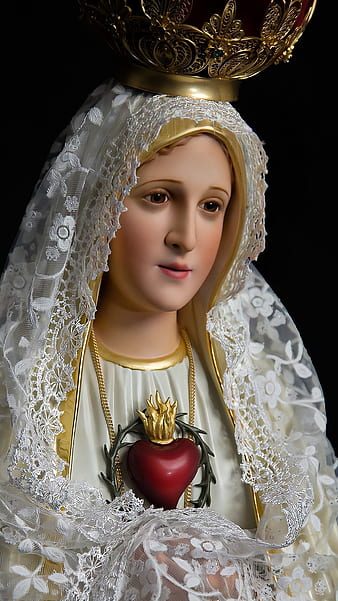
Title: The Power of Devotion to Our Lady of Fatima
Introduction: π Welcome, dear readers, to an enlightening journey into the power of devotion to Our Lady of Fatima! As a devoted Christian Roman Catholic, I am excited to share with you the profound impact that devotion to the Blessed Virgin Mary can have on our lives. Let us explore the significance of this devotion and how it can strengthen our spiritual journey.
The Divine Connection: π Our devotion to Our Lady of Fatima establishes a special connection with the Virgin Mary, the Mother of God. Just as Mary played a pivotal role in God's plan for our salvation by accepting to be the mother of Jesus, she intercedes for us before her Son in heaven. This devotion draws us closer to the heart of our faith.
The Example of Mary: πΊ Our Lady of Fatima serves as an example of pure devotion and unwavering faith. Her humble response to the angel Gabriel's message teaches us to surrender ourselves completely to God's will, just as she did when she said, "Behold, I am the handmaid of the Lord; let it be done to me according to your word" (Luke 1:38). We can learn from her obedience and trust in God.
The Miracle of Fatima: β¨ The apparitions of Our Lady of Fatima in 1917 in Portugal were a powerful manifestation of divine grace. Three young shepherd children, Lucia, Francisco, and Jacinta, were blessed to witness these apparitions. Mary's message during these extraordinary events emphasized the importance of prayer, conversion, and peace, offering hope and encouragement to all.
The Power of Prayer: π Our devotion to Our Lady of Fatima strengthens our prayer life. Mary invites us to embrace the rosary, a powerful tool that unites us with the mysteries of Christ's life. Through the rosary, we can meditate on the joyful, sorrowful, glorious, and luminous moments of Jesus' journey on earth, deepening our spirituality and relationship with God.
The Call to Conversion: π Our Lady of Fatima's message resounds with the call to conversion and repentance. She reminds us of the importance of examining our lives, recognizing our sins, and seeking forgiveness. By turning away from sin and embracing God's mercy, we open ourselves to a transformative journey of faith.
The Promise of Peace: π Mary's message at Fatima emphasized the urgent need for peace in the world. She called for prayer, penance, and devotion to her Immaculate Heart as a means to obtain peace. Our devotion to Our Lady of Fatima inspires us to become ambassadors of peace, spreading love, compassion, and understanding in our daily lives.
Protection and Intercession: π‘οΈ Our Lady of Fatima is a powerful advocate who intercedes for us before God. Just as Mary cared for Jesus throughout his life, she watches over us as her children. We can confidently turn to her in times of trouble, seeking her protection, solace, and guidance, knowing that she will bring our petitions to her Son.
The Healing Power of Fatima: π Devotion to Our Lady of Fatima carries the potential for physical, emotional, and spiritual healing. Countless testimonies have illustrated the miraculous healings and graces bestowed upon those who earnestly seek Our Lady's intercession. By opening our hearts in faith, we allow her maternal love to envelop us.
Inspiration for Family Life: πͺ Our devotion to Our Lady of Fatima can deeply impact our family life. Just as Mary cared for her own family, she guides us in nurturing love, harmony, and faith within our own homes. The Fatima message encourages family prayer, especially the Rosary, which strengthens the bonds between family members and fosters spiritual growth.
The Communion of Saints: β Our devotion to Our Lady of Fatima also connects us with the vast network of saints and holy men and women who have gone before us. Their example and intercession inspire us to persevere in faith, reminding us that we are not alone on our spiritual journey.
Mary, the Mother of God: π Our devotion to Our Lady of Fatima reaffirms the central place of Mary in the Christian faith. She is not only the Mother of Jesus but also our spiritual mother. As the Catechism of the Catholic Church beautifully states, "By her complete adherence to the Father's will, to His Son's redemptive work, and to every prompting of the Holy Spirit, the Virgin Mary is the Church's model of faith and charity" (CCC 967).
The Role of Scripture: π The Bible provides numerous instances highlighting Mary's significance. From her role in the Annunciation (Luke 1:26-38) to her presence at the foot of the cross (John 19:26-27), Mary's obedience, faithfulness, and love stand as a testament to her unique role in salvation history.
The Saints and Marian Devotion: π Throughout history, countless saints have demonstrated deep devotion to Mary. St. Louis de Montfort, St. Maximilian Kolbe, and St. John Paul II are just a few examples of saints who have experienced the transformative power of Marian devotion and actively promoted it.
The Call to Holiness: πΉ Our devotion to Our Lady of Fatima inspires us to strive for holiness, following Mary's example as a model of virtue. Through her intercession and guidance, we are encouraged to grow in love, humility, patience, and charity, seeking to become more Christ-like in our thoughts, words, and actions.
Your Thoughts: π€ Now, dear readers, I would love to hear your thoughts on the power of devotion to Our Lady of Fatima. Has Marian devotion played a significant role in your own spiritual journey? How has it impacted your relationship with God and others? Share your insights and experiences below!
Updated at: 2023-08-05 13:19:31 (2 years ago by Melkisedeck Leon Shine)
The Blessed Virgin Mary: A Channel of God's Grace
"Hail Mary, full of grace, the Lord is with thee!" These words, spoken by the angel Gabriel, forever changed the course of human history. π
The Virgin Mary, the mother of Jesus, holds a special place in the hearts of Catholics around the world. She is seen as a channel of God's grace, a vessel through which His love and blessings flow. πΉ
In the Bible, we see numerous examples of Mary's role as a channel of God's grace. From the moment of the Annunciation, when she humbly accepted God's plan for her life, to the wedding at Cana, where she interceded on behalf of the newlyweds, Mary's presence was a source of blessing. π
One of the most profound biblical examples of Mary's role as a channel of God's grace can be found in the Magnificat, her beautiful prayer of praise and thanksgiving. In Luke 1:46-55, Mary proclaims, "My soul magnifies the Lord, and my spirit rejoices in God my Savior." This prayer reminds us that Mary's faith and trust in God allowed her to be open to His grace and love. π
The Catechism of the Catholic Church teaches us that Mary is "the Mother of God" and "the model of the Church's faith." She is not only the physical mother of Jesus, but also the spiritual mother of all believers. Through her maternal intercession, she brings us closer to her son and helps us grow in holiness. πΊ
Throughout history, countless saints and theologians have recognized the important role of Mary in our spiritual journey. St. Louis de Montfort, for example, wrote extensively about Mary's role as a channel of God's grace in his book "True Devotion to Mary." He encourages us to entrust ourselves to Mary's care, knowing that she will lead us closer to Jesus. β€οΈ
The devotion to the Blessed Virgin Mary is deeply rooted in the Catholic tradition. From the earliest centuries, Christians have looked to Mary as a source of comfort, guidance, and intercession. Her gentle presence and unwavering faith are a shining example for all believers. βͺ
Mary's unique role as the Mother of God sets her apart from any other human being. She was chosen by God to be the vessel through which His Son would enter the world, bringing salvation to all. As Catholics, we deeply honor and love Mary, recognizing her as a powerful advocate and intercessor before God. π
In the words of St. Bernard of Clairvaux, a great medieval saint, "Of Mary there is never enough." This simple yet profound statement reminds us that Mary's love and grace are limitless. No matter how much we turn to her, she always has more to give. π·
The Rosary, a beloved Catholic prayer, is a beautiful way to honor and seek the intercession of the Blessed Virgin Mary. Through meditating on the mysteries of Christ's life, death, and resurrection, we unite ourselves with Mary and open our hearts to God's grace. πΏ
The Catholic Church teaches that Mary's role as a channel of God's grace is not limited to the past. She continues to intercede for us and bring us closer to her Son in the present. Just as she stood at the foot of the cross, offering her love and support to Jesus, she stands with us in our joys and sorrows today. πΉ
As Christians, we are called to imitate Mary's faith, humility, and love for God. Just as she said "yes" to God's plan for her life, we too must surrender ourselves to His will and trust in His providence. Mary shows us that through our openness to God's grace, miracles can happen. π
The devotion to Mary is not meant to detract from our worship of God, but rather to enhance it. She leads us closer to her Son, pointing us always towards Jesus. In the words of Pope Francis, "The Church is like Mary, her mother and model: a Church that is a mother, that has children, that has a mother's heart." π
In conclusion, the Blessed Virgin Mary is indeed a channel of God's grace. Her complete trust in God, her unwavering faith, and her motherly love make her a powerful intercessor on our behalf. Let us turn to her with confidence, knowing that she will guide us closer to her Son and shower us with God's abundant grace. π
What are your thoughts on the Blessed Virgin Mary as a channel of God's grace? How has her presence influenced your spiritual journey? Share your reflections and experiences in the comments below. π